Edu-Ecotourism Mangrove
Through our subsidiary Chandra Asri Group, we are proud to champion the Patikang Mangrove Edu-Ecotourism Area.
Acting as a vital buffer zone for the Tanjung Lesung Special Economic Zone, this 9,500-square-meter coastal area is being transformed into a thriving hub for conservation, education, and sustainable livelihoods. Our mission here is clear: maximize blue carbon to support Indonesia’s de-carbonization goals while ensuring the local coastal community thrives.
Coastal communities often face the dual threat of climate change (abrasion, rising sea levels, extreme weather) and economic vulnerability during fishing off-seasons. Our approach goes beyond traditional tree-planting; it is a holistic social innovation program. By collaborating closely with the local village government, mangrove conservation experts (IKAMaT), and local citizen groups, we are building a resilient ecosystem driven by circular economy principles.
Impact
as of December 2025
Environmental Conservation & Blue Carbon
A healthy coastal ecosystem is one of our best defenses against climate change. The mangrove forest acts as a massive “blue carbon” sink—absorbing and storing carbon more efficiently than terrestrial forests.
- Biodiversity Haven: The area supports vital flora like Rhizophora and Sonneratia, protecting against coastal erosion while acting as a habitat for local wildlife.
- The Estuary Waste Trap: To protect these fragile root systems from marine debris, we installed a physical Waste Trap along the Citeureup estuary. This critical infrastructure catches floating river trash before it can infiltrate the mangrove forest, keeping the ecosystem clean and healthy.
Circular Economy & Sustainable Infrastructure
We are redefining how industrial waste can be utilized to build resilient, eco-friendly infrastructure.
- Upcycled Trekking Paths: Using non-B3 industrial waste (viable wooden pallets), we constructed an extensive, elevated trekking path allowing visitors to explore the forest without disturbing the sensitive mudflats.
- Recycled Plastic Goat Pens: In a unique approach to agricultural waste management, we used recycled plastic waste to build local goat pens. This addresses end-of-life plastic issues while reducing our Global Warming Potential (GWP) by over 950 kg CO2eq.
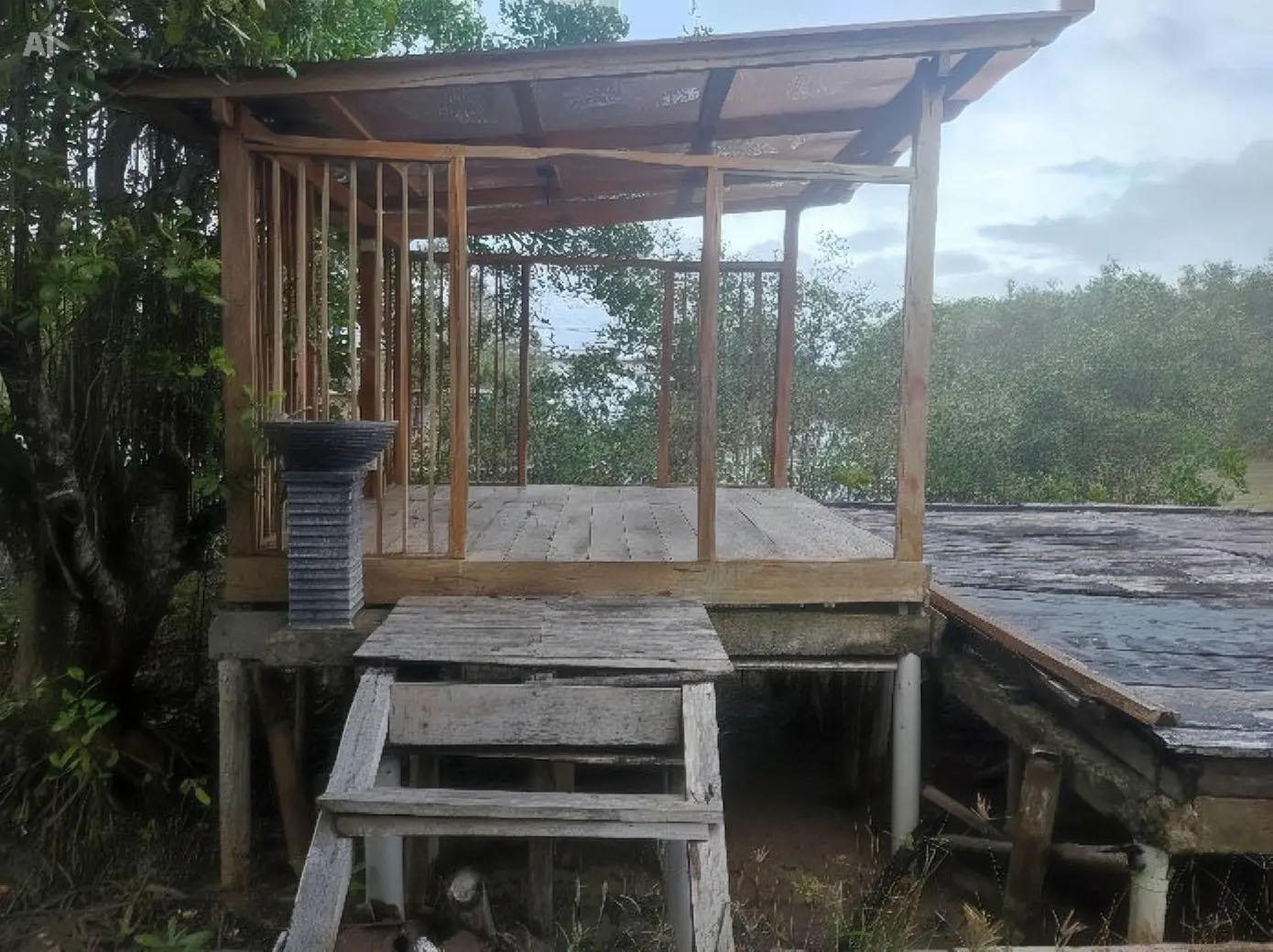
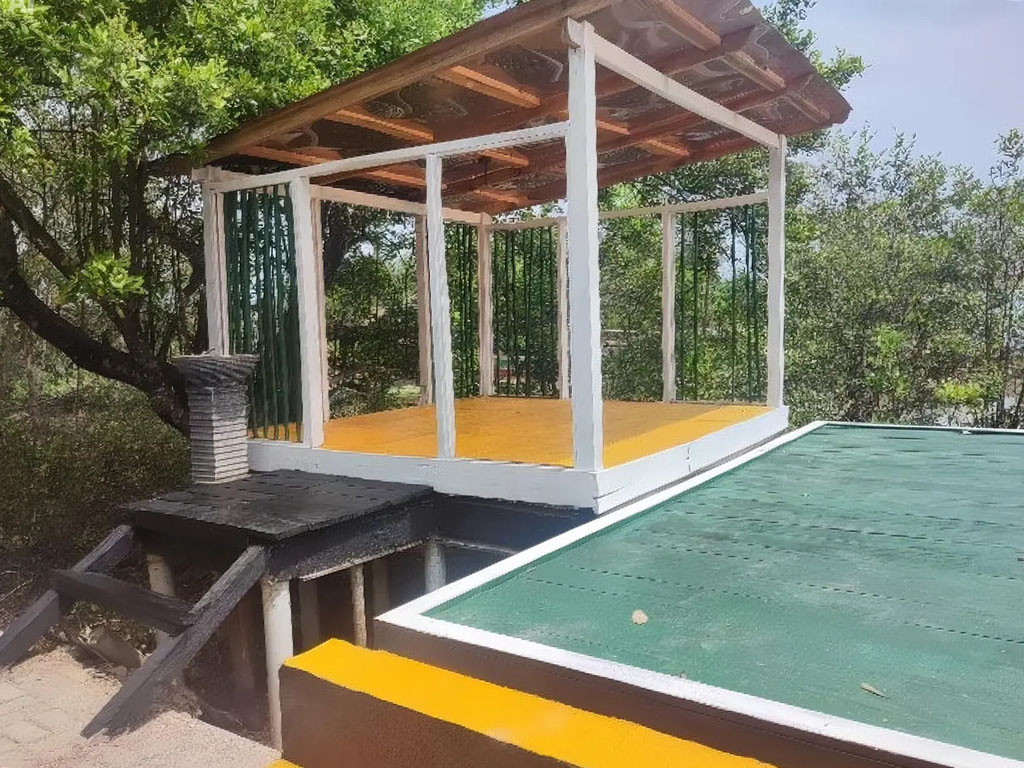
- Edumaps & Educational Gazebos: To serve the “Edu” part of Edu-Ecotourism, we have installed comprehensive Edumaps (educational signages) across the site and built a Saung Edukasi (Educational Gazebo) to guide and educate visitors on the importance of mangrove conservation.
Empowering Coastal Women Through Sustainable Batik
Economic resilience is vital. In 2024, alongside IKAMaT, we officially established the Kelompok Mangrove Patikang Berseri (KMPB)—a dedicated collective of local coastal women. We provide them with the training and resources to produce premium, eco-friendly batik inspired by the forest.
- Eco-Friendly Natural Dyes: The women gather fallen mangrove propagule waste (specifically Rhizophora) to extract rich, earthy brown dyes. By using only fallen waste, no living trees are harmed, and no harsh synthetic chemicals enter the local water systems.
- Economic Transformation: A single kilogram of propagule waste produces 5,000 ml of natural dye. The finished, hand-crafted batik cloths generate significant alternative income, transforming the local economy during the harsh fishing off-seasons (musim paceklik).
Driven by Collaboration
Sustainable change is driven by the community, for the community. The daily operations and tourism aspects of the site are proudly managed by the local tourism awareness group, Pokdarwis Putri Gundul. Through continuous capacity building, comparative studies, and stakeholder engagement, the people of Patikang are now the primary guardians of their coastline.
See the transformation